
Our homes are our sanctuaries and we want to keep them as healthy as possible so identifying signs of poor ventilation is a great place to start. Ventilation simply put is removing the “bad” air from inside the home and replacing it with fresh air. This can be done in a few different ways. Mechanical ventilation is the most common. This is where an exhaust fan is utilized to exhaust the stale/contaminated air out of the home. Other methods are considered natural ventilation where you rely on opening windows or doors to allow the fresh air to come in and push the stale air out. There are more nuances to these but the basics are either you are controlling the ventilation of the home through an exhaust fan or you are letting nature control it through openings in the home. Now that we have an understanding of ventilation let’s take a look at some of the signs your home is not being properly ventilated.
Mold or Mildew
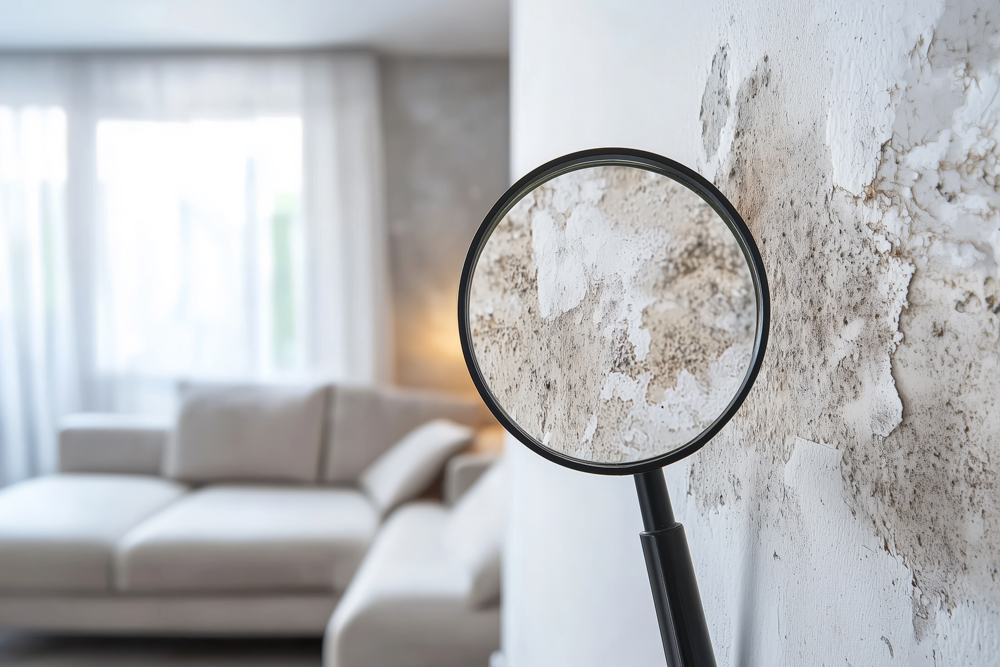
The easiest place to look for this is in the bathrooms as that is where it will be most prevalent. If your bathroom is not properly ventilated, it won’t take long for the constant presence of moisture to create a mold and mildew issue. This typically happens for one of 3 reasons:
- A bathroom exhaust fan is not present. Without any way of mitigating moisture, it will be very difficult to control moisture build-up. We would highly recommend installing an exhaust fan.
- The current exhaust fan is not being used properly or is not working. This could be either it doesn’t get turned on or is not run for a long enough time. For most bathrooms, the fan should run for at least 20 minutes after the shower has been used. A solution for both of these is to install a humidity sensor that will automatically sense the humidity level of the room and turn the fan on or off accordingly. If you are in the market for a new exhaust fan you can look for one that has this feature integrated into the fan. For existing exhaust fans, a wall switch (like the Air King DH55) can easily be added.
- The current exhaust fan is not powerful enough for the room. In general, you will need at least 1 CFM (cubic feet per minute) of ventilation for one square foot of space. For instance, a 10-foot by 10-foot bathroom equals 100 square feet, requiring at least 100 CFM of ventilation. The challenge is that just because a fan says it delivers a certain amount of CFM, it might not. Factors such as how the fan was installed, how much ducting and many more factors can decrease the fan’s airflow. The solution might be to upgrade your fan to a higher airflow. If installing a new fan is not an option, running it longer is a work around. You can also consider a humidity switch as was discussed above.
Dust
This seems like a little bit of an odd one. All homes have dust – right? While that is true, let’s take a look at how dust accumulates. In order for dust to build-up it cannot be moving around. It has to settle in one place. If your home is being properly ventilated a good amount of the dust should be exiting the home. It will not be 100% but it should be noticeably less. Having an exhaust fan running continuously can help the build-up. National building codes now require a whole-house continuously running exhaust fan to be installed in a central location of the home. This is a great first step to having a properly ventilated home.
Musty Smell
Does your home smell musty, especially when you come back after being away for a few days. This is a tell-tale sign of poor ventilation. The smell is typically coming from a build-up of moisture somewhere in the home and is usually because fresh air is not getting into the home. As with the other signs, having properly operating exhaust fans – especially a whole house exhaust fan will greatly reduce moisture build-up and the musty smells that it produces.
Sickness
Does it seem like someone is always sick in the household? A contributing factor could be poor indoor air quality. If things like mold and mildew are present in the home and are not mitigated, they will cause a constant state of unhealthy air to be breathed in by all the inhabitants of the home which could lead to sickness. Poor ventilation can also contribute to illnesses being passed from one member of the household to another as well as prolonged illness. Have you heard the term “go out and get some fresh air”? A second best to that is making sure the air inside is fresh. While having a properly ventilated home is not going to protect you from ever being sick, it could greatly increase your health by reducing the factors that lead to you being sick. If you are in a season where it seems like someone is always sick, try looking at your home’s ventilation and make adjustments to increase the amount of ventilation and especially the amount of fresh air coming into the home.
Hot or Cold Rooms
Here is another item that most people would not consider as part of signs of poor ventilation but do you have areas of your home that are either too cold or too hot? While there are multiple factors that could contribute to that – poor insulation, HVAC system issues, poorly installed windows and so forth, a hidden item might be ventilation. How ventilation plays into this is by making sure there is a good airflow through the home. This allows the conditioned air to be properly distributed through throughout the home. Without airflow your HVAC system might be pumping cool air (during the summer month) into the house but without good room to room airflow, some rooms will not be cooled as well as others. A simple way to demonstrate or test this is to go to the room furthest away from your HVAC system on a hot day where the air conditioner is running. Close the door for a little while and see what happens to the temperature of the room. It will probably increase compared to the rest of the home. This happens because the cooler air from the other rooms is not able to be circulated as it needs to be. While in theory each room should be able to be cooled (or heated in the winter) on its own – in reality, it just doesn’t happen that way and the home relies on the air being circulated.
Is your home showing signs of poor ventilation? We hope that this article can help you identify and correct them. Air King offers a full line of ventilation solutions that can help the overall indoor air quality of your home. To learn more about Air King exhaust fans and fresh air intake, visit airkinglimited.com.


