Showing posts with label whole house exhaust. Show all posts

Thursday, April 2, 2026

What is a continuously operating exhaust fan?

A continuously operating exhaust fan is designed to run nonstop at a low speed, constantly removing stale, humid, or polluted air from your home. Unlike traditional exhaust fans that are switched on only when needed (like during a shower), these systems provide ongoing ventilation. Many models include a boost speed that provides additional ventilation when needed. These are referred to as dual speed models with a low speed that runs continuously, then a high speed that provides extra ventilation when the room is occupied.

Why Continuous Operating Exhaust Fans Matter

Today’s homes are built tighter than ever for energy efficiency. While that’s great for reducing heating and cooling costs, it also means that fresh air isn’t entering the home as easily—and indoor contaminants can get trapped. Continuously operating exhaust fans help solve this problem by:

• Removing excess moisture that can lead to mold and mildew
• Reducing odors from bathrooms, kitchens, and pets
• Improving overall indoor air quality
• Helping control allergens and airborne particles

Key Benefits

1. Moisture Control
Bathrooms and laundry areas produce a significant amount of humidity. Without proper ventilation, that moisture can seep into walls, ceilings, and insulation—leading to costly damage over time. A continuous operating exhaust fan ensures that moisture is consistently removed, even after you leave the room.

2. Healthier Air
Indoor air can contain dust, VOCs (volatile organic compounds), and other pollutants. Continuous ventilation helps dilute and remove these contaminants, creating a healthier living environment.

3. Odor Reduction
Because air is constantly being exchanged, odors don’t linger as long. This is especially beneficial in homes with pets, small children, or high occupancy.

4. Energy Efficiency
Continuously operating exhaust fans are required by code to be energy efficient and quiet. Almost all fans used in these applications will be ENERGY STAR® certified and most will use less energy on low speed than a light bulb. The benefits of significantly increased indoor air quality far outweigh the small amount of energy used.

5. Code Compliance
Building codes and standards—such as those influenced by organizations like ASHRAE—increasingly emphasize the importance of continuous ventilation in residential construction. Installing a continuously operating exhaust fan can help ensure your home meets these evolving requirements.

Where Should You Use Them?

Continuously operating exhaust fans are most commonly installed in:

• Bathrooms
• Laundry rooms
• Hallways (for whole-house exhaust strategies)

In some homes, a single centrally located fan can serve multiple areas.

Is a Continuously Operating Exhaust Fan Right for Your Home?

If your home feels stuffy, has persistent humidity issues, or lacks proper ventilation, a continuously operating exhaust fan could be a smart investment. They are especially beneficial in:

• Newer, tightly sealed homes
• Homes in humid climates
• Households concerned with air quality and health

Final Thoughts

Continuously operating exhaust fans offer a simple yet powerful way to improve indoor air quality, protect your home from moisture damage, and create a more comfortable living environment. As homes continue to evolve, ventilation is no longer optional—it’s essential. And continuous exhaust is quickly becoming one of the most effective ways to achieve it. For more information about Air King continuously operating exhaust fans, visit the ENERGY STAR certified exhaust fan section on the main Air King website.

Thursday, September 5, 2024

Do I need a Continuously Operating Exhaust Fan?


You might be getting ready to buy your first home, your dream home or even renovating your current home and the builder starts talking about a continuously operating exhaust fan. Your first reaction might be – what’s that? You’re not alone. For many homeowners exhaust fans are something that just comes with the house and not much thought is given to them. As home building has advanced, so has the need for ventilation within the home. Lets take a look at a few reasons you do need a continuously operating exhaust fan, starting with what is it.

What is a continuously operating exhaust fan?

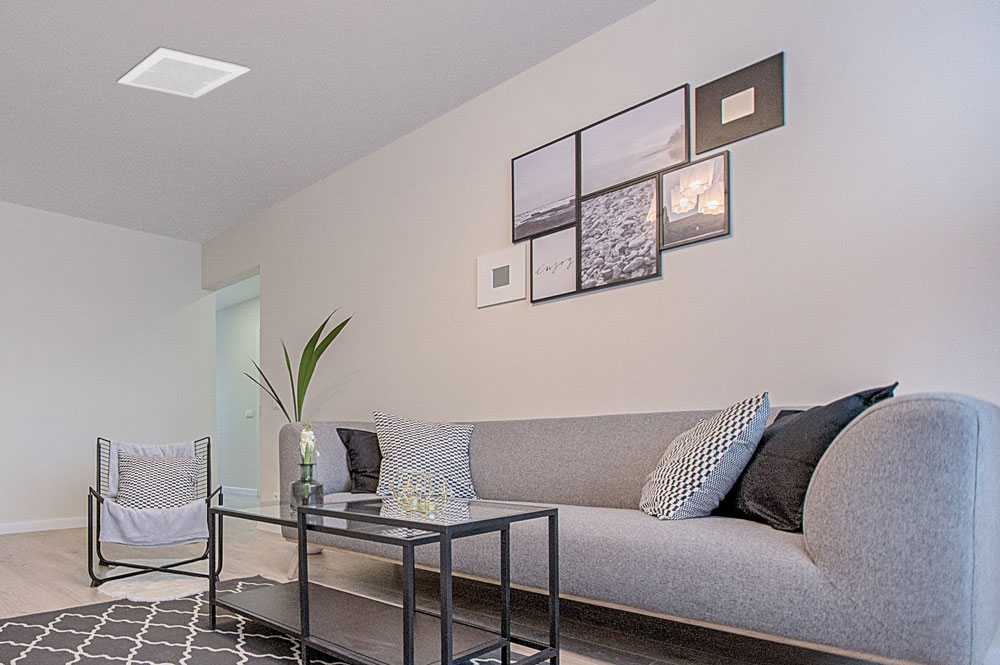
The name is fairly descriptive. It is an exhaust fan that is continuously operating to remove moisture and contaminates from the home and providing multiple air exchanges per day (about one air exchange every 3 hours). To maximize their effectiveness they are typically installed in a central location of the home such as a family or living room. Because they are located in a main living space, they are required to have a very low sound level – less than the sound of your refrigerator.

Why do I need one?

The importance of a continuously operating exhaust fan will depend on the age and construction type of your home. In the paragraph above we talked about air exchanges. This is actually part of the national building code known as ASHRAE 62.2. The purpose of the code is to make sure the air inside the home does not become “stale” and in some cases dangerous. Newer homes are now being built to higher insulation standards, which make the home less susceptible to drafts. This is a good thing. What happens however is that because the house is so tight, it doesn’t allow for fresh air to come in or stale air to get out. This is where the exhaust fans come into play and in some cases a fresh air intake fan. In older homes, they generally have more air leaks and a continuously operating exhaust fan might not be as crucial. A benefit of using an exhaust fan is it puts the control in your hand instead of depending on drafts or other factors to determine the quality of your indoor air.

What should I look for?

As we mentioned, for these fans to be most effective they need to be installed in a centralized room such as a living room or family room. Choosing a fan with a low sound level is important. Exhaust fan sound levels are measured in sones with one sone being about the sound your refrigerator makes. The building code calls for a fan with a sound rating of one sone or below. The lower the sones, the quieter the fan is. A second consideration that is just as important is to make sure the fan has enough airflow. Airflow is measure in CFM or cubic feet per minute. Air King provides an easy calculator along with ASHRAE 62.2 information here. It is important that you have enough ventilation without over powering it and causing a negative pressure in the home (exhausting more air than is coming into the home). A final consideration is that you want an energy efficient fan. Since it will be running continuously, you don’t want it to be a burden on your electric bill. Air King offers a wide range of ENERGY STAR® certified models to fit almost any residential home need.

For more information about Air King exhaust fan solutions as well as continuously operating exhaust fans and ASHRAE 62.2 building codes, visit airkinglimited.com.

Friday, May 1, 2020

Is the Code Enough? Part 3

Over the past few blog posts we have been looking at code compliance and the difference between meeting the code and exceeding the code. In this post we are going to look at the ASHRAE 62.2 ventilation standard. In past blog posts we have described aspects of the standard such as local ventilation and continuous ventilation. In short ASHRAE 62.2 is a national ventilation code to promote air exchanges in your home to better the indoor air quality (IAQ). The basics of the code are to have an exhaust fan running continuously at a low speed, then using other fans throughout the house to take care of higher ventilation needs like cooking or when the shower is in use. Meeting the code means that you have an exhaust fan installed in a centrally located area of your home.

Great, that sounds fairly easy and for the most part it is. A popular way to solve for this is to install a two-speed exhaust fan in the bathroom. This is a fan that runs constantly on low speed at an almost silent sound level then when more ventilation is needed boosts to high speed. This can be done by a switch, humidity sensor, or motion sensor that is integrated into the fan.

So far so good; I think we have it covered. Code met, let’s move on to the next item. Here’s the thing (okay, you didn’t really think we would end it there did you?), while to the letter of the code, this installation might meet it, we need to look at it a little closer. First we need to think a little about how air travels and where contaminates are located in the home. Generally, the kitchen cooking area is going to be the location of the largest amount of contaminants generated in the home. If you are installing the continuous running exhaust fan in a bathroom, it is generally going to be on the other side of the home as the kitchen. This means that the exhaust is going to be pulling air from the kitchen throughout the home and through the living spaces. Not exactly an ideal solution. Here is another issue. What happens when the bathroom door is closed? Now you have either cut off or severely restricted the airflow. Let’s take it one step further. If the fan is installed in a master bathroom, that typically means two closed doors to navigate through.

Some installers will place the fan in the living room or a hallway. This is better as you won’t have to deal with the closed-door issue as much, but you are still drawing air that you want to exhaust through living areas. So I guess we are doomed. Can’t install it in the bathroom, can’t install it in a living area, where then?

There is a solution that takes all these issues into account. Place the continuous ventilation in the kitchen. There are reasons the kitchen is called the heart of the home. Typically the kitchen will be in a central location of the home or at least open to the rest of the home. This makes it a perfect location. There are now range hoods available that have multiple speeds. They have a continuous operation speed that will solve for, as the name states – continuous airflow. The sound level at this speed is barely detectable. When the cooktop is being used, they have higher speeds to take care of the additional airflow needed to properly ventilate while cooking. Now you have the ventilation placed at the source of one of the largest contaminators of the home. The added benefit is that the continuous speed will take care of the residual contaminants in the air after the cooking is done. While we would like to think everyone is properly using their range hood, we also know that is not always the case. These range hoods install the same as traditional range hoods, so if you are installing one anyway, why not solve two things at once. The only consideration is that they are going to cost more than an entry-level basic range hood. The counter to that is if you go the bathroom route, a two-speed exhaust fan is also going to cost more than a standard exhaust fan also. Another point is that you will also have a much quieter operating range hood.

When it comes to solving for ASHRAE 62.2 continuous ventilation, there are options. Some designed to meet the code, some designed to exceed the code. Hopefully this gives you some things to consider. For more information about continuous operation range hoods or ASHRAE 62.2 solutions visit www.airkinglimited.com